Your go-to resource for expert insights and carefully curated professional advice. Plan your renovation with confidence and ease
Built-In Furniture vs. Ready-Made: What Nobody Tells You Before You Renovate
03.06.2026, 09:14 GMT Views: 829 Likes: 38
The decision seems simple -- until you're living with the consequences.
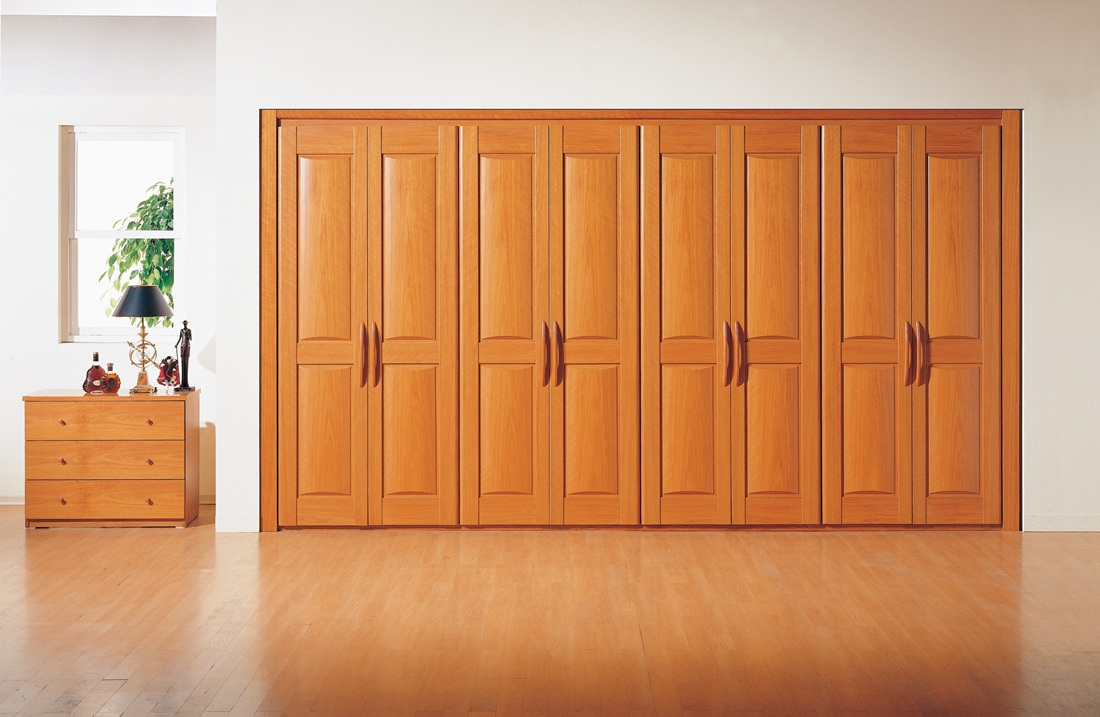
There's a moment in almost every renovation when you stand in an empty room, tape measure in hand, and the question hits you like it's the first time anyone has ever had to answer it: do I build it in, or just buy something? Fitted wardrobes or a freestanding armoire. A custom kitchen or modular units from a showroom. A built-in desk alcove or a table you can shove into the hallway when you need floor space.
The internet will tell you it's mostly about budget. It isn't. It's about how you actually live, how long you plan to stay — and how honest you're willing to be about both.
What "Built-In" Actually Means (And What It Doesn't)
The term gets thrown around loosely. Strictly speaking, built-in furniture is made for a specific spot in your home — anchored to walls, fitted floor to ceiling, shaped around whatever quirks the space has thrown at it: sloped ceilings, deep alcoves, that one chimney breast nobody knows what to do with. It becomes, in the truest sense, part of the building.
Freestanding — or carcass — furniture is the opposite: manufactured units, standard dimensions, designed to be placed, moved, and eventually replaced. It can be cheap or genuinely expensive, tasteful or obviously flat-pack. What defines it is that it doesn't belong to any wall in particular.
The confusion arises because modern freestanding furniture has gotten very good at pretending otherwise. Floor-to-ceiling modular systems can look almost indistinguishable from true built-ins — until moving day, when you take them with you.
When to Choose Custom
Walk into a room with well-designed built-in furniture and you feel it before you can name it: a sense of calm, of things being settled. The storage reaches the ceiling. The awkward recess beside the fireplace has been turned into a display niche. Nothing floats. Nothing wobbles.
That's the core argument for built-ins, and it's a strong one. In homes where space is genuinely tight — compact city apartments, older buildings with non-standard proportions — custom furniture can unlock storage that simply doesn't exist in standard dimensions.
Fitted furniture, done well, also reads as architecture rather than furniture. It lifts the perceived quality of an entire room — and in most property markets, a well-fitted kitchen or a proper library wall adds real, measurable value.
The downsides are just as real. Cost is the obvious one — custom carpentry is slow, skilled work, and errors are expensive to fix. But the less-discussed risk is inflexibility. Built-ins commit you to a layout. A new baby, a new job, a sudden passion for ceramics that needs shelf space — the furniture won't adapt. And if you're renting or genuinely unsure how long you'll stay, investing a serious sum in fixtures you can't take with you is a proper gamble.
When to Stay Flexible
Freestanding furniture has had something of a quiet comeback over the past decade — partly aesthetic, partly just practical. The trend toward "unfitted" kitchens, rooms with vintage standalone pieces, and generally more adaptable living spaces has given the humble modular unit a bit of its dignity back.
The argument starts with freedom. Freestanding furniture moves with you. It can be reconfigured, sold, repurposed. In an era when people move more often and life changes faster, that portability isn't nothing.
Cost is also more predictable. You can phase purchases, mix price points, replace individual pieces without pulling apart a whole scheme. A broken drawer means ordering a new unit, not calling a carpenter.
The weakness, though, is fit. Standard carcass furniture assumes standard rooms, and most rooms aren't. The gap above the wardrobe collects dust. The unit that's almost the right width leaves a sliver of wasted wall. Corners get lost. In smaller homes especially, these inefficiencies stack up — and the visual restlessness of furniture that doesn't quite belong can quietly undermine an otherwise good interior.
Getting the Numbers Right (Before Someone Else Gets It Wrong)
Most renovation regrets trace back to this exact moment: a decision made from memory, rough approximation, or wishful thinking. "The alcove is about 90 centimeters, I reckon." It's 86. The unit doesn't fit. The carpenter gets a phone call.
Whether you're going fitted or freestanding, proper planning pays back many times over. More and more homeowners — and professional designers — are doing the work in online room planners before committing anything to reality, and the tools available now are genuinely a different category from the basic drag-and-drop apps that existed a few years ago.
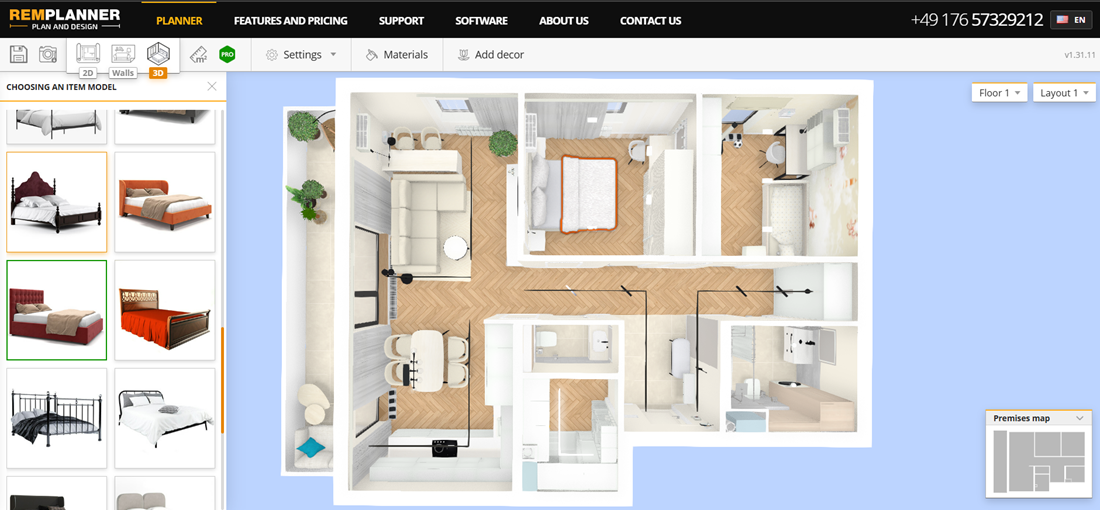
The better ones let you work with real dimensions and enough catalogue depth that you're not just nudging generic boxes around a floor plan. We use Replanner ourselves for this — it's grown into one of the more thorough tools in this space, the kind where you can go deep enough to actually trust what you're looking at. That level of specificity changes the quality of the decisions you make. It's the difference between "I think this will work" and having a real basis for knowing.
Good planning tools don't make the decision for you. But they let you stress-test it before you've spent anything.
The Hybrid Approach (More Common Than You'd Think)
In practice, the most successful interiors don't commit entirely to one camp. The kitchen is fitted — because built-in cabinetry almost always earns its cost in both function and resale. The bedroom has a fitted wardrobe in the alcove, because the space demanded it, but freestanding bedside tables and a chest of drawers that might move somewhere else one day. The living room is anchored by a built-in media unit but filled out with freestanding pieces around it.
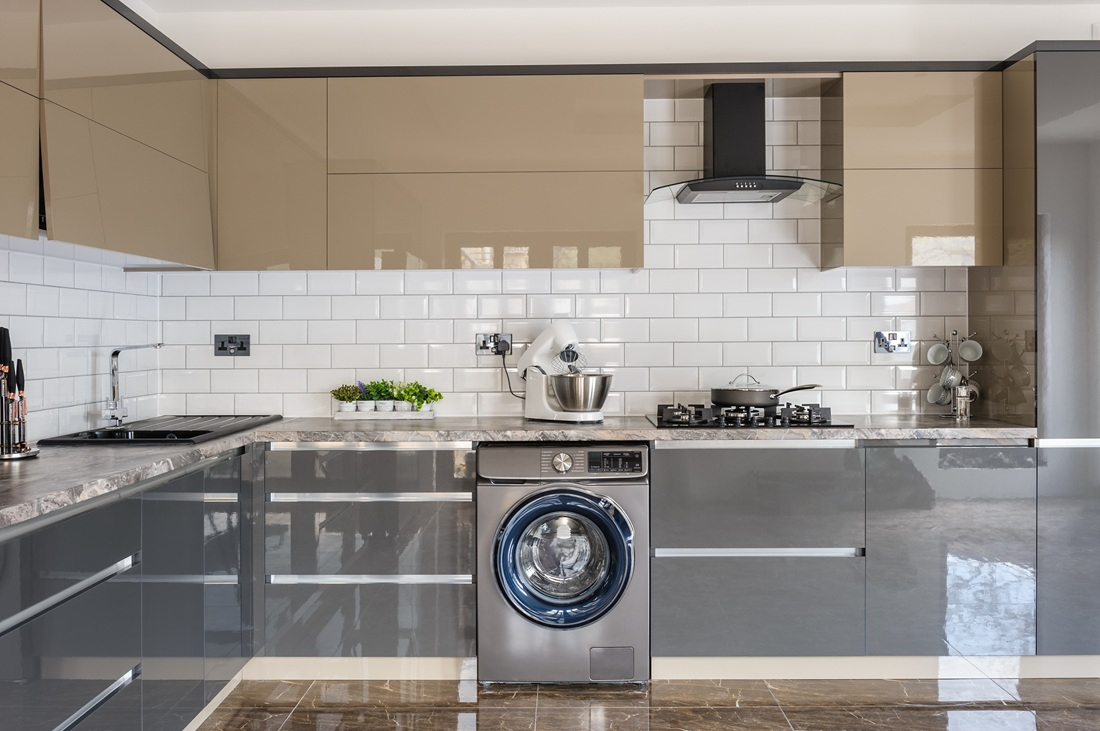
Made room by room rather than as a whole-house ideology, the decision becomes far less fraught. You're not picking a philosophy. You're solving a specific spatial problem with whatever works best.
Some rooms almost always reward built-ins: kitchens, bathrooms, and anything with significant architectural irregularity. Others — guest bedrooms, children's rooms that will need to change, secondary spaces — are natural territory for freestanding furniture that can evolve as the household does.
Questions Worth Asking Before You Decide
How long are you staying? If the answer is genuinely uncertain, lean freestanding for anything that isn't structural.
What are the actual dimensions? Not a rough estimate — actual. Measure twice. Then measure again.
Is the space architecturally odd? Alcoves, slopes, non-standard heights: these almost always make a case for built-ins.
What's the resale situation? In a high-value property, fitted storage adds value. In a rental or a quick flip, it may not come back.
How might your needs shift? A built-in home office assumes you'll always need a home office. A desk that moves doesn't make that assumption.
See It Before You Build It
The single most useful change in how people renovate over the past ten years is the shift toward planning-first thinking. Choices that used to be made with a rough sketch and a lot of hope are now made in proper 3D environments — where you can check proportions, finishes, and sight lines before anyone has lifted a tool.
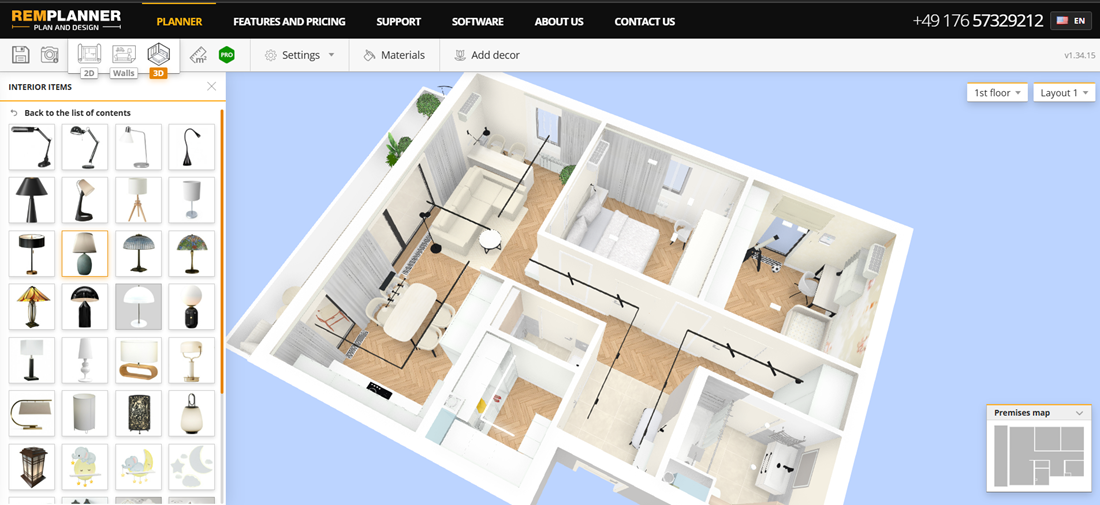
For anyone working through the built-in versus freestanding question — or mapping out a hybrid approach across multiple rooms — spending real time in a proper planning tool has stopped being optional. There's a noticeable difference between roughing something out on paper and working in something with enough depth to ask real questions about a space. Replanner sits firmly in the second category — a free, browser-based tool, no installation needed — and a session in it tends to surface things you wouldn't have thought to check otherwise.
That matters because this is, at its core, a spatial argument. And spatial arguments are almost impossible to resolve in your head. You need to see it — placed in the room, at the right scale, in the right proportions. Doing that work before any money changes hands is what separates renovations people are quietly proud of from ones they spend years mentally redesigning.
The Bottom Line
Neither built-in nor freestanding furniture is the right answer. Both belong in well-designed homes — often in the same room. The question was never which is better. It's which is better here, for this space, for this particular version of your life.
What the most successful renovations tend to have in common is simpler than any design principle: the people behind them thought it through. They measured carefully, planned seriously, and made decisions based on how they actually live — not some aspirational version of it.
The furniture debate is, in the end, a design problem. And design problems respond to thinking before doing.
Working through a layout decision? Getting it down on a plan — to scale, in 3D — usually reveals more than a week of thinking about it will.
 Antonella
Marconi