Your go-to resource for expert insights and carefully curated professional advice. Plan your renovation with confidence and ease
Wallpaper or Paint — How to Actually Decide
03.06.2026, 10:00 GMT Views: 1487 Likes: 43
Which suits which room, why scale and light matter more than the pattern itself -- and how to see what it actually looks like before buying.
Most people end up with paint not because they chose it, but because wallpaper felt like too much of a commitment. Which is fair. But a lot of those same people end up living with rooms that feel kind of... fine. Finished, but not really there. Paint did its job and nothing more.
So here’s a more honest look at both options — when each one makes sense, and when it doesn’t.
The Case for Paint
Paint is underrated, genuinely. People often dismiss it as the boring default, but there are rooms where it’s exactly the right call.
Anywhere things change a lot — a kid’s room, a home office, a rental you’ll eventually leave — paint wins on pure practicality. You can redo it in a weekend for not much money. You can change your mind. That freedom is real, and worth something.
Small spaces can also work surprisingly well with paint. Take a tiny hallway or a narrow bathroom, go dark on all four walls including the ceiling, and suddenly it feels intentional. Moody and deliberate instead of just small. Wallpaper in the same space can easily tip into busy territory.
And if the room itself has good bones — decent ceiling height, nice trim, interesting windows — paint often lets all that breathe. Throwing a bold wallpaper into a room that already has character can sometimes feel like one voice too many.
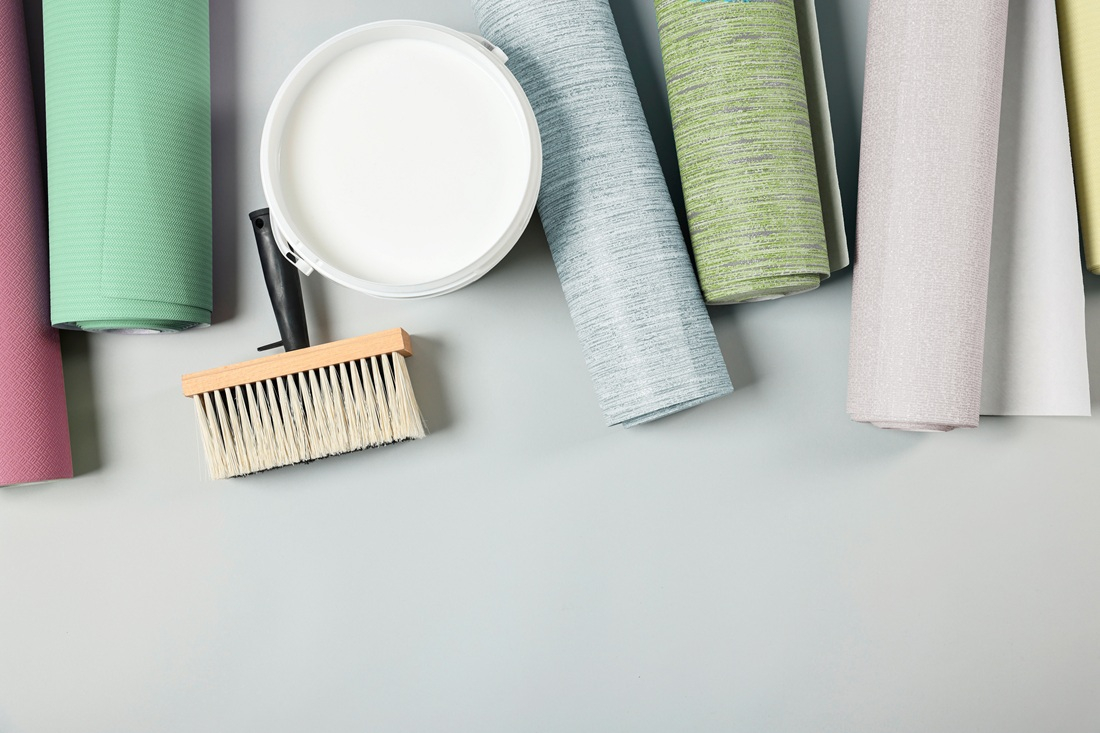
There’s also a middle ground that not enough people consider: paintable wallpaper. You hang it like regular wallpaper — it has texture, embossed pattern, some relief to it — and then you paint over it in any color you want. So you get the depth and surface quality that flat paint never gives you, but you keep the ability to repaint when you’re bored of the color. It’s especially useful for rentals, or for people who like the idea of wallpaper but aren’t ready to pick a pattern and live with it long term.The tradeoff is that you won’t get anything graphic or botanical — it’s purely textural. But in the right setting, it’s genuinely clever and still weirdly underused.
The Case for Wallpaper
At the same time, here’s the thing about a painted wall — even a beautiful one — it’s still just a flat surface. Wallpaper changes something more fundamental about how a room feels. The way light hits it differently through the day. The way it makes a space feel finished in a way that’s hard to pin down but obvious when it’s there.
A linen-weave paper in the same grey as a paint color you love will do completely different things to the room. Not necessarily better — just different. More physical, more present.
Wallpaper also tends to age better than paint in practical terms. Paint scuffs and marks and starts looking tired. A decent wallpaper hides minor wall imperfections, holds up to daily life, and often looks better with a bit of age on it rather than worse.
Where it clearly makes sense: living rooms, bedrooms, dining rooms, hallways. Spaces where you’re not about to rip everything out in two years.
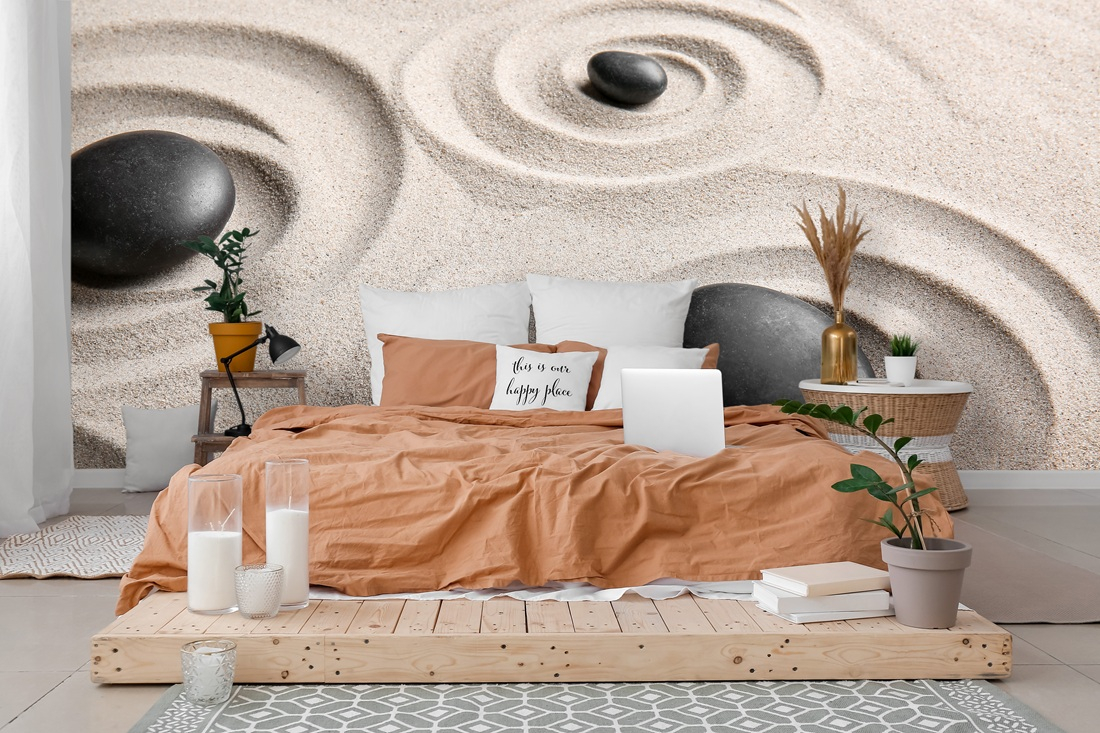
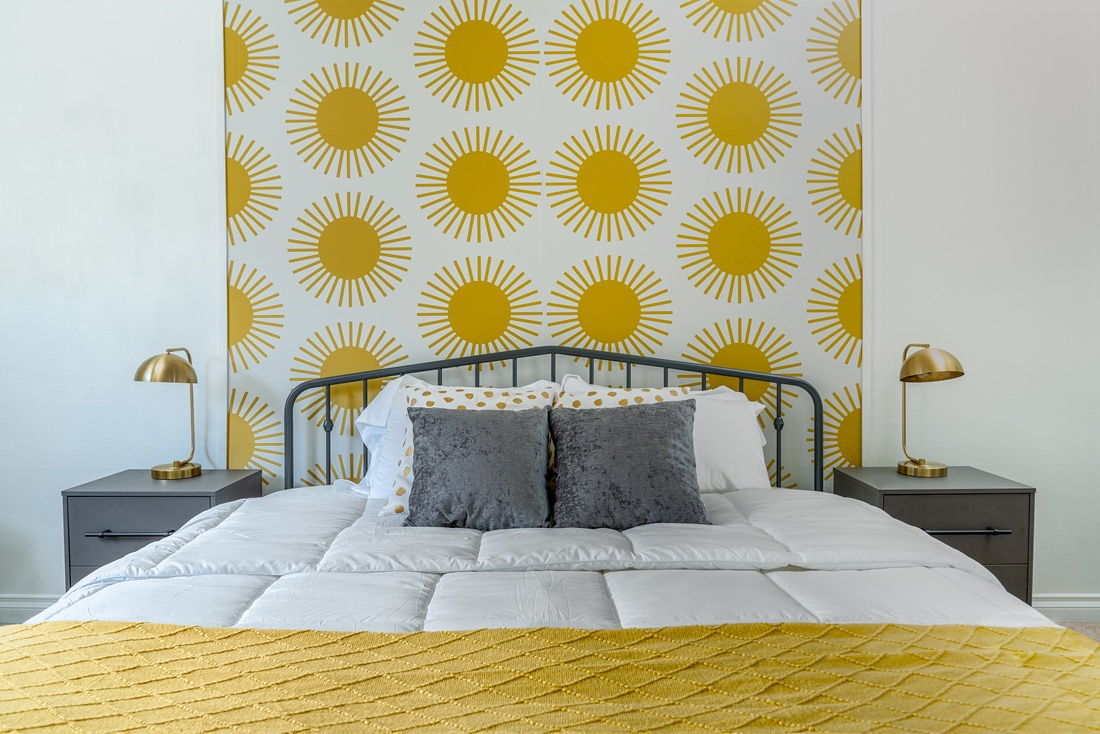
And if you’re nervous about committing to a whole room — start with one wall. Usually the wall you see first when you walk in, or the wall behind the bed. One strong choice there, with everything else quiet around it. It’s not really a compromise — it’s actually how a lot of good rooms are done in the first place.
Patterns — How to Chose
Botanicals are popular for a reason — organic shapes just work in rooms, something about them settles a space. Geometrics look great when they're given room to breathe and everything else in the room is simple; they go wrong when the room is already busy. Textural papers — things that look like plaster or grasscloth or raw concrete — are probably the most underused category. No real pattern, just surface quality. They add a lot without demanding attention, which is harder to pull off than it sounds.
Actually Choosing — Where Most People Get Stuck
Scale is the thing nobody thinks about until the rolls arrive. A pattern that looks amazing in a magazine photo can be completely overwhelming in your actual room with your actual furniture. A delicate small print that looks refined on a swatch can vanish on a large wall and leave it looking like nothing much. Pattern repeat matters. Wall height matters. How far back you stand from the wall matters.
Light is the other one. A paper with any metallic thread or sheen in it will look different in a north-facing room versus a south-facing one, different under warm evening light versus morning daylight. Order samples. Tape them to the wall. Look at them at different times of day for a few days before you decide anything.
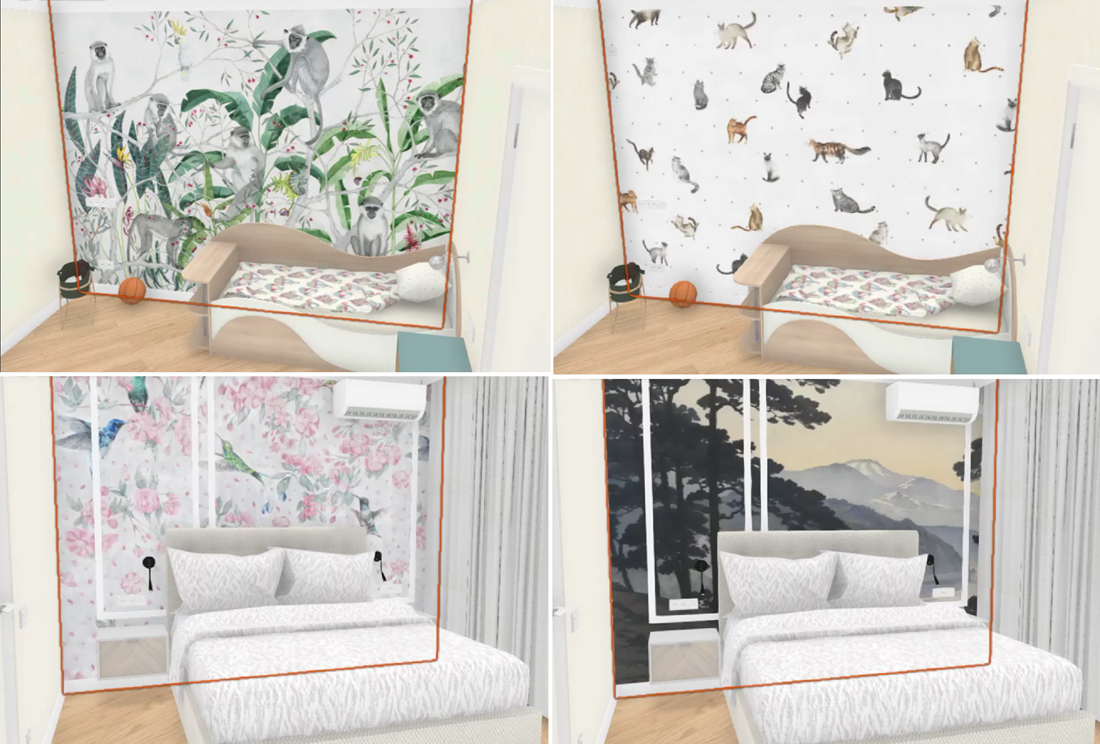
The harder problem is seeing how a wallpaper actually works with everything else in the room — the floor, the trim color, the furniture, the curtains. That's a lot to hold in your head at once while staring at a small physical swatch. This is where online planners like Remplanner genuinely help — you put your room in the planner and see how different papers actually look in context, against real dimensions, next to the other things in the space.
The wallpaper library in Remplanner includes close to two thousand real samples from established manufacturers — Aura, Rasch, Marburg among others — so what you’re seeing is very close to what you’d actually get. It helps close the gap between imagining something and knowing whether it really works.
So Which One?
Honestly, often both. Paint where you need flexibility, or where the room is already doing a lot on its own. Wallpaper where you want atmosphere and you’re ready to commit to it.
The rooms that feel really good are usually the ones where someone made a clear decision and followed it through rather than hedging everything. And wallpaper is a clearer decision than paint — that’s part of what makes it feel a little scary, and part of what makes it work so well when it does.
If you’re somewhere in the middle, still figuring out what the room needs, Remplanner is worth spending an afternoon with. Try things. See what the space actually looks like before you order anything. Sometimes that alone is enough to take a lot of the anxiety out of the process.
 Antonella
Marconi